


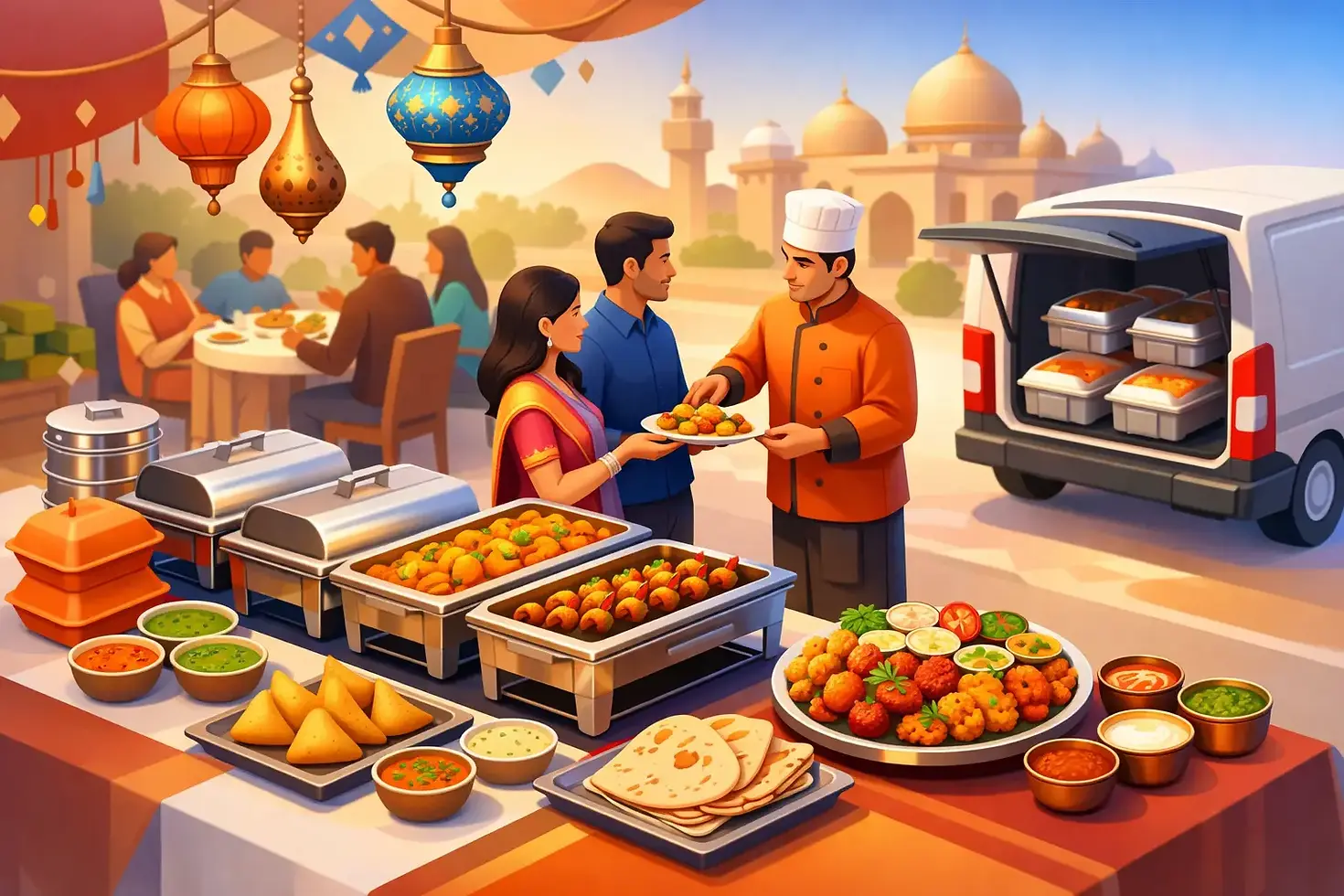
Indian Restaurant Catering Guide for Groups
- rajshiva6
- 1 hour ago
- 6 min read
A great catered meal does more than fill the table. It gives colleagues a reason to linger after a meeting, makes family celebrations feel generous, and lets the host spend time with guests instead of worrying about the stove. This Indian restaurant catering guide will help you plan a flavorful, well-balanced spread that works for different ages, appetites, and dietary needs.
Indian food is especially well suited to group dining because the menu naturally encourages sharing. A fragrant biryani, warm naan, creamy curry, crisp starters, and colorful vegetarian dishes can sit together on one table without feeling repetitive. The key is choosing enough variety without ordering so much that the meal becomes confusing or wasteful.
Start Your Indian Restaurant Catering Guide With Your Guests
Before choosing dishes, get clear on the occasion. An office lunch usually needs food that is easy to serve and comfortable to eat during a short break. A birthday dinner or family gathering can be more generous, with starters, multiple mains, desserts, and relaxed time around the table. For a casual weekend event, biryani and snack platters may be exactly what everyone wants.
Guest count matters, but so does guest mix. A group of hungry adults after a long workday will eat differently from a gathering with young children, seniors, or guests who are new to Indian cuisine. Ask early about vegetarian, vegan, dairy-free, nut-free, and gluten-sensitive requirements. You do not need a separate dish for every person, but every guest should have more than one satisfying option.
Spice level also deserves a quick conversation. Indian food can be rich in aroma and flavor without being intensely hot. For mixed groups, choose mostly mild to medium dishes and add chili sauces or spicy side dishes for guests who want more heat. This keeps the meal welcoming instead of making people guess what they can eat.
Build a Menu With Variety, Not Too Many Dishes
A dependable catering menu usually has a few familiar anchors, then adds regional variety. Think of the meal in layers: starters for the first arrival, hearty mains for the center of the table, rice and breads for sharing, and cooling sides that bring everything together.
For starters, tandoori dishes are a strong choice. Tandoori chicken brings smoky, charred flavor and is easy to serve at gatherings. Vegetable samosas, paneer dishes, chicken kebabs, and Indo-Chinese favorites can also work well when guests will be standing, chatting, or arriving at different times. Choose items that stay enjoyable for a while rather than foods that need to be eaten the moment they leave the kitchen.
For mains, balance a tomato-based curry or a creamy dish with something brighter and more savory. Butter chicken or chicken tikka masala may feel familiar to first-time diners, while a pepper chicken, fish curry, or Chettinad-style dish can add depth for guests who enjoy bolder regional flavors. Include at least two vegetarian mains for most group orders. Paneer, chickpeas, lentils, mixed vegetables, and eggplant all bring different textures and make the table feel complete.
Biryani is often the easiest centerpiece for a larger group. It is filling, convenient to portion, and full of fragrance from rice, herbs, and spices. Chicken, mutton, vegetable, or egg biryani can be paired with raita and gravy so guests can adjust each bite to their preference. If biryani is the main event, you may need fewer curries than you would for a meal built around plain rice and naan.
Do not forget the contrast dishes. Raita cools spicy flavors, salads add freshness, and pickles or chutneys bring a sharp, lively finish. Naan, roti, or paratha are useful for scooping curries, but they should support the meal rather than replace enough rice. For a fuller celebration, add dessert such as gulab jamun, kulfi, or another sweet finish that can be served easily after the main meal.
A simple formula for balanced catering
For a group that enjoys a full meal, plan for one or two starters, two to three mains, one vegetarian main, a rice dish, breads, and one or two sides. Add dessert when the event is celebratory or when guests will stay longer. Smaller lunch orders can be simpler: one biryani or rice option, two mains, one vegetarian dish, and raita may be plenty.
Plan Portions Based on the Main Event
Portion planning is where many catering orders go wrong. Ordering by headcount alone can leave you short if the food is the main attraction, or leave too much behind if your event includes snacks, drinks, cake, or a buffet from several cuisines.
If Indian food is the only meal, plan generously. Guests will usually want rice or biryani, a serving of one or two curries, bread, and sides. For a meal with a wide variety of dishes, moderate portions of each item often work better than large amounts of every curry. Variety encourages guests to try several flavors, so the total meal feels plentiful even when each tray is carefully planned.
For office lunches, consider whether people will eat at staggered times. Food intended for a 12:00 p.m. lunch may need to stay available through 1:30 p.m. or later. Choose items that hold well, and order enough rice, breads, and vegetarian dishes so late arrivals still have a proper meal.
For dinner parties, add a little extra if guests are likely to socialize over food for several hours. Biryani, naan, and popular chicken dishes tend to go quickly. If your group includes many children, add mild familiar choices and avoid making every main spicy. If you are serving alcohol, a few extra starters and breads are often a smart choice.
Make Dietary Choices Easy and Clear
A thoughtful host does not make guests ask repeatedly what they can eat. When placing the order, request clear labels for vegetarian and non-vegetarian dishes. Keep vegetarian serving utensils separate where possible, especially when guests have religious or personal dietary preferences.
Vegan and gluten-sensitive guests need more than an afterthought. Lentil dishes, chickpea curries, vegetable preparations, and rice-based dishes may be suitable, but recipes vary. Confirm ingredients, including cream, ghee, yogurt, and flour, before finalizing the menu. The same care applies to allergies. A restaurant can explain ingredients, but guests with severe allergies should always share their needs in advance.
Quality standards matter here too. At Nandhana's Restaurant, dishes are prepared with a focus on authentic flavor and everyday care, including no added MSG, no artificial preservatives, and cooking oil that is not reused. These details help hosts serve food with greater confidence, especially for family meals and workplace gatherings.
Confirm Delivery, Setup, and Timing
Excellent food can still arrive at the wrong moment if logistics are left until the last minute. Confirm your event address, delivery time, contact person, elevator or loading instructions, and whether the caterer needs access to a reception desk or security gate. For offices, tell the team where the food should be placed and whether disposable plates, cutlery, napkins, and serving utensils are needed.
Ask how the food will be packed. Large trays are practical for buffet-style service, while individually packed meals may be better for training sessions, meetings, or events where guests need to eat at their desks. Individual portions simplify distribution, but they can limit menu variety and create more packaging. Buffet trays offer a warmer, more communal experience, though they need table space and someone to keep the line organized.
Timing is particularly important for breads and fried starters. Naan is best enjoyed warm, while samosas and other crisp items can soften if they sit too long. Schedule delivery as close to serving time as practical, but allow a buffer for building access, parking, and setup. If your event has a fixed start time, do not assume every guest will arrive exactly on schedule.
Place the Order With a Clear Final Check
A day or two before the event, review the final details: guest count, menu, spice preferences, dietary notes, delivery address, serving time, and payment. Confirm what is included, from sauces and raita to plates and utensils. This small check prevents the common problems that turn up when a host assumes rather than asks.
On the day, set out serving spoons, labels, napkins, water, and space for guests to move comfortably around the food. Put vegetarian dishes together, keep sauces nearby, and place rice or biryani where guests can reach it easily. A well-arranged table makes the meal feel more generous before anyone takes the first bite.
The best catered Indian meal is not the one with the longest menu. It is the one where every guest can find something inviting, every dish arrives with care, and the host gets to sit down and enjoy the fantastic flavors too.


Comments